Biography
“Ceramics is the language of change and transformation.
Understanding that our Earth created slow changes over millions of years, and that we as ceramicists replicate much of that process to create our work, connects me to something greater.
At the same time, this demands a great responsibility: working with earth, water, fire, and air means handling materials that have undergone an immense geological journey, just so that today we can mold them and give them new meanings.”
– Luciano Polverigiani.
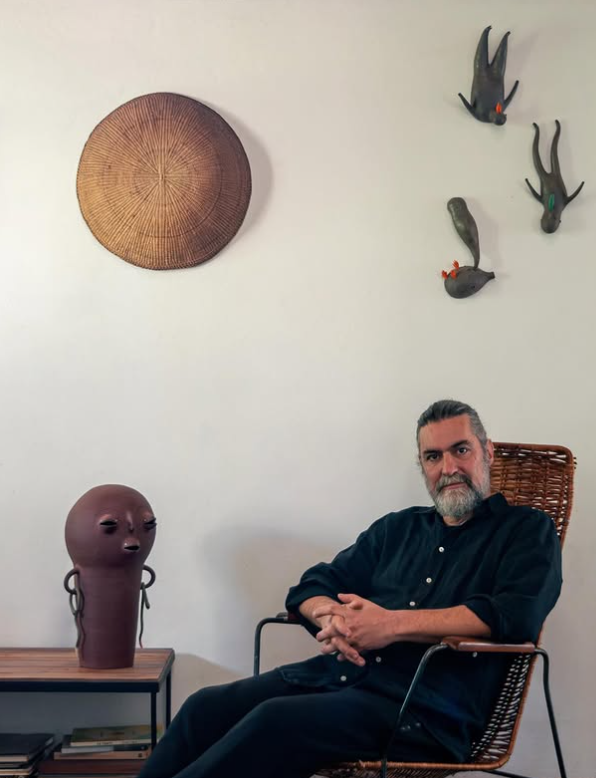
Argentine ceramic artist Luciano Polverigiani has been working with clay for more than 30 years. He graduated from the Fernando Arranz Ceramic School in Buenos Aires in 1993 and has since developed a distinctive practice centred on storytelling, character and the playful possibilities of ceramics. His work has been exhibited extensively in Argentina and internationally.
Luciano’s sculptural works bring together groups of expressive clay characters, creating scenes of dialogue, interaction and subtle tension. He draws inspiration from the material traditions of ancient American civilisations, using glazes and enamels to highlight the natural character of clay while giving each work a distinctive simplicity and charm.
A central concept in Luciano’s practice is his ongoing series of “ceramic toys,” which explores the unexpected relationship between the fragility of ceramics and the durability traditionally associated with toys. His sculptures often incorporate movable elements that can be repositioned to create new compositions, scenes and visual relationships.
The playful nature of these works begins in the studio, where Luciano develops ideas through drawing, experimentation and continual rearrangement. His process embraces play as a way of discovering new forms and meanings, allowing the material, the figures and the artist’s imagination to shape each work.
The result is a body of ceramic sculpture that is both tactile and engaging—works that invite the viewer to look closer, imagine the stories unfolding between the characters and, ultimately, play.